Skip to navigation
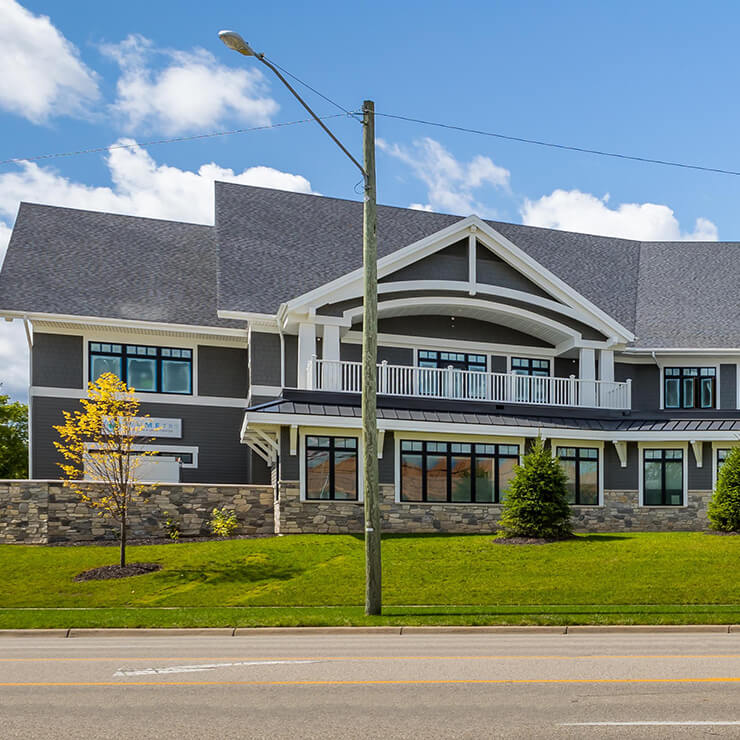
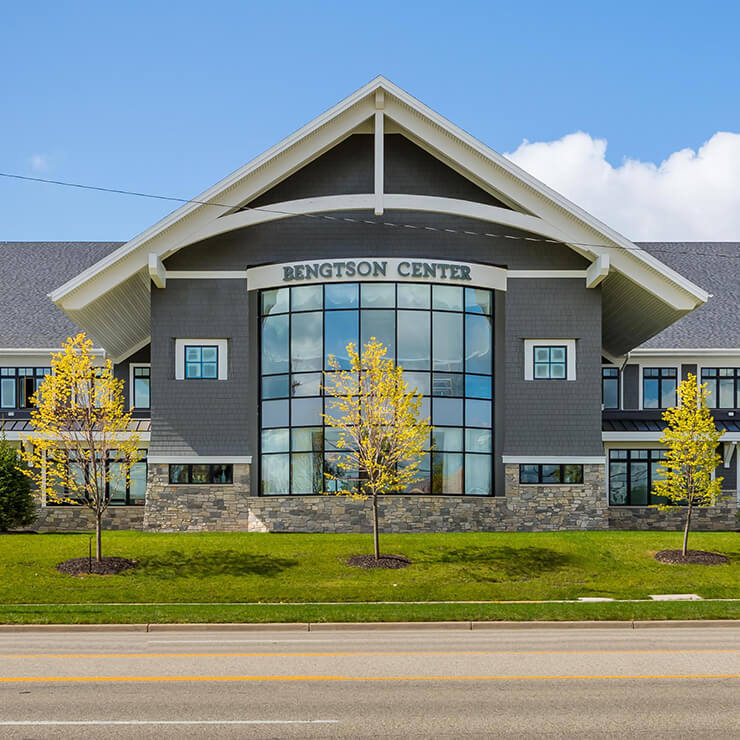
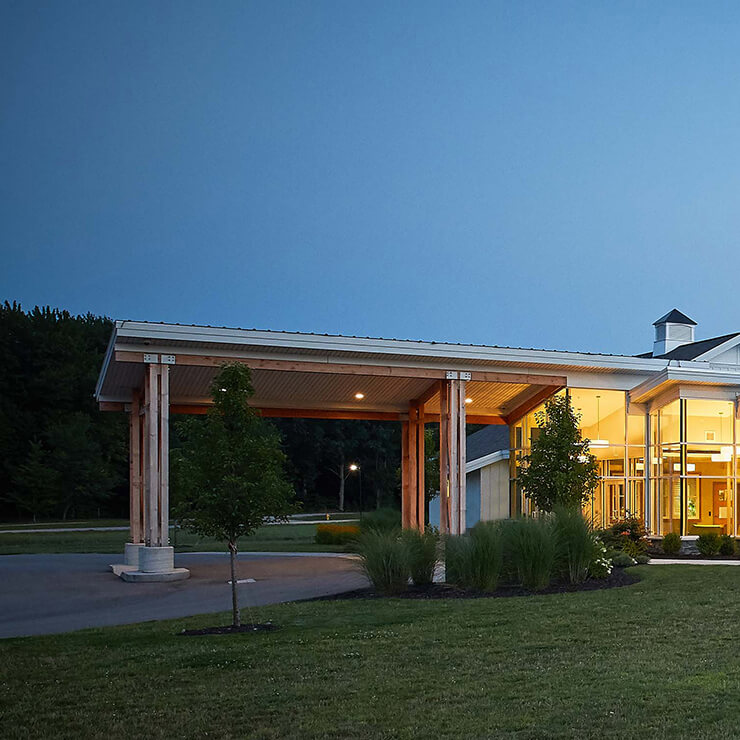
  • A deep curving canopy that covers patient drop-off at the medical office building entry warmly welcomes guests and helps protect from sun, snow, wind and rain.
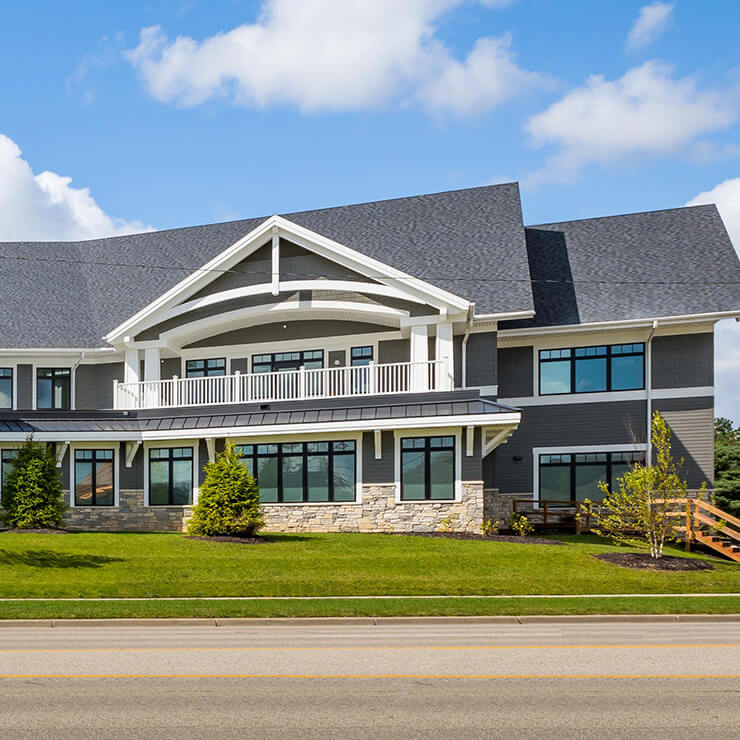
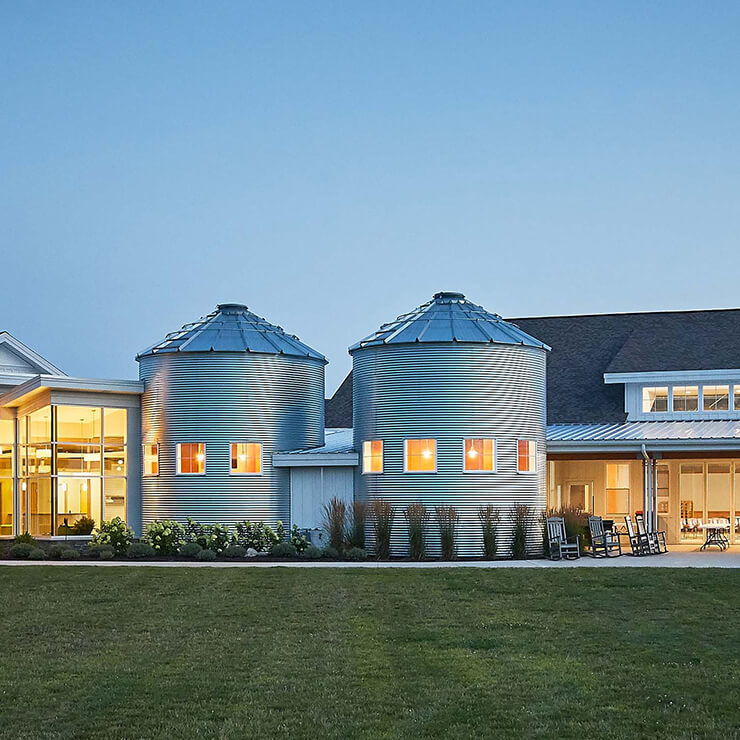
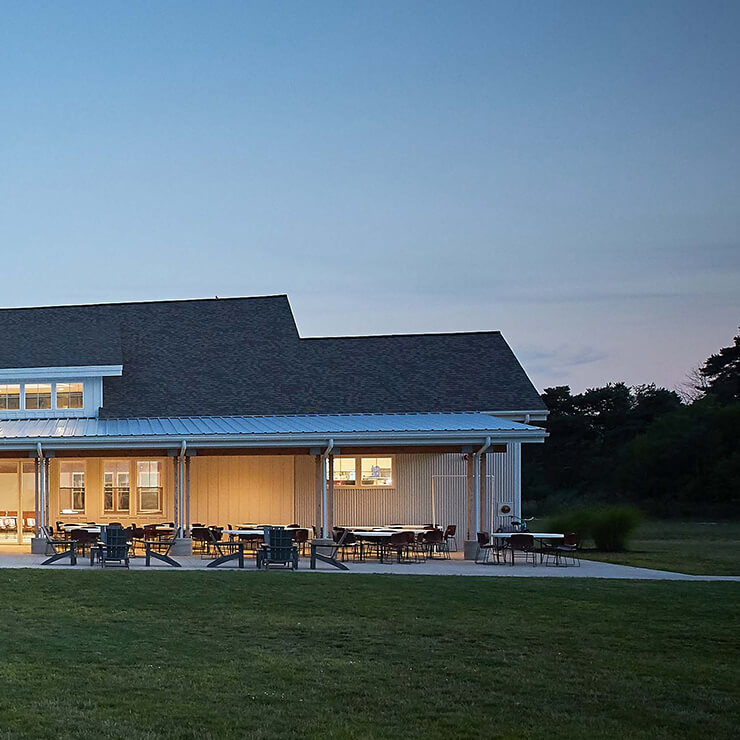
  • AMDG designed the new medical building to relate with the whole healthcare campus.
  • A sweeping entry canopy is a physical expression of exceptional modern medical care and non-institutional healthcare practices.
  • Operating rooms are designed to facilitiate adjacencies for patient and physician flow, and provide a flexible infrastructure for advanacements in medical technology.
  • Project name

    Medical Office Building and Ambulatory Surgical Center
  • Project Type

    Healthcare
  • Location

    Grand Rapids, MI (map)
  • Completed

    Fall '04
  • Building Area

    116,000 sq. ft.
  • General Contractor

    Pioneer Construction
  • Delivery Method

    construction manager
By designing the new medical building into a steeply sloping hillside, AMDG created multiple levels of access for controlled flow of patients, physicians, and medical supplies.

Medical Office Building and Ambulatory Surgical Center

I was extremely pleased with the attention we received during the [design] process.  Attention to detail has resulted in a beautiful and functional Ambulatory Surgery Center.

Linda Kirk
Former Director of Ambulatory Surgery Services at Spectrum Health

Merging Two Worlds – Relevant Technology and Patient Comfort

With rapid growth in medicine in West Michigan, the Hughes Medical Office Building was envisioned to support today’s most current medical procedures and to adapt to the changing technologies of tomorrow.  The owner desired to meet the growing need for same day outpatient surgeries that are otherwise typically performed in a hospital setting in an effort to offer a more comfortable environment for patient care.

AMDG began by forming a team of experts to address the needs of developing technologies and also the basic need for patient comfort in what can be an uncomfortable and tense environment.  Building on the diverse and deep knowledge base of owner, builder, engineers, physicians and medical staff, the design for the new building and tenant space successfully merges technology and comfort.

Five operating rooms are equipped with state-of-the-art laparoscopic and arthroscopic equipment and were designed with flexibility to expand to eight operating rooms.  Specialty services with modern procedural amenities include general surgery, orthopedics, podiatry, urology and gynecology.

Comfort in both pre and post-operative environments is provided from parking to pick up.  A light sweeping canopy that identifies the main entrance shelters patients being dropped off for procedures from rain, snow or wind.  Convenient covered parking is available for guests and staff and clear signage directs first time visitors with ease.  The large open lobby is flooded with indirect natural light and amenities including a small café and soft seating warmly welcome guests into a calming atmosphere.  Support staff thoughtfully care for patients from check-in to check-out to further calm and relieve patient stress and anxiety.

Simplifying Complexity of Flow – Patient, Treatment, and Physician/Staff

A need for controlled and unobstructed patient, administrative staff and physician flow was required while still preserving a relaxed patient environment.

AMDG addressed the challenge of a highly complex flow of people by first identifying the different streams of activity and then by focusing on logical and efficient travel paths for each.  The resulting combination of patient, treatment and physician and staff flow is smooth and seamless.

  • Patient flow moves from arrival and pre-operative intake activities and ends with post-operative recovery and discharge.  Natural light and comfortable and intentional seating for family and guests set the stage for a composed and orderly pathway to treatment.
  • Treatment flow processes include preparation, instrumentation, sterilization, and cleaning.  A non-sterile workroom was located adjacent to sterile cleaning and storage and is supported by multiple scrub sink rooms between each pair of operating rooms.  This arrangement creates necessary short and fluid pathways from soiled to sterile environments.
  • Physician, staff and support flow require proximity to both patients as well as treatment processes.  By locating physician offices, staff lockers, and break areas away from patient flow, patient pathways are cleared of any unnecessary traffic.  Main registration and nurse stations located in recovery areas are strategically placed at essential control points to address basic patient needs and provide a high quality level of care.

Challenges Successfully Overcome

The Hughes Medical Office Building is the third phase of an existing medical campus.  The design for the building addresses two different challenges: developing a cohesive campus and building into a steep hillside.  By using the same material palette as Phase I and II but in a different manner, AMDG was able to integrate the building into its campus setting while providing it with a distinctive identity. By incorporating the building into the hillside, AMDG designed three levels of on-grade access into the building, helping to efficiently move patients and medical supplies in and out of the building.  AMDG also used the hillside to orient the building for excellent visibility to the community while still maintaining a relatable human scale at the campus level. The signature gesture of a sweeping canopy at the main entry encapsulates the overall vision for the building as both progressive and sensitive to patient health and care.

Designed and created by DDM Marketing & Communications.